
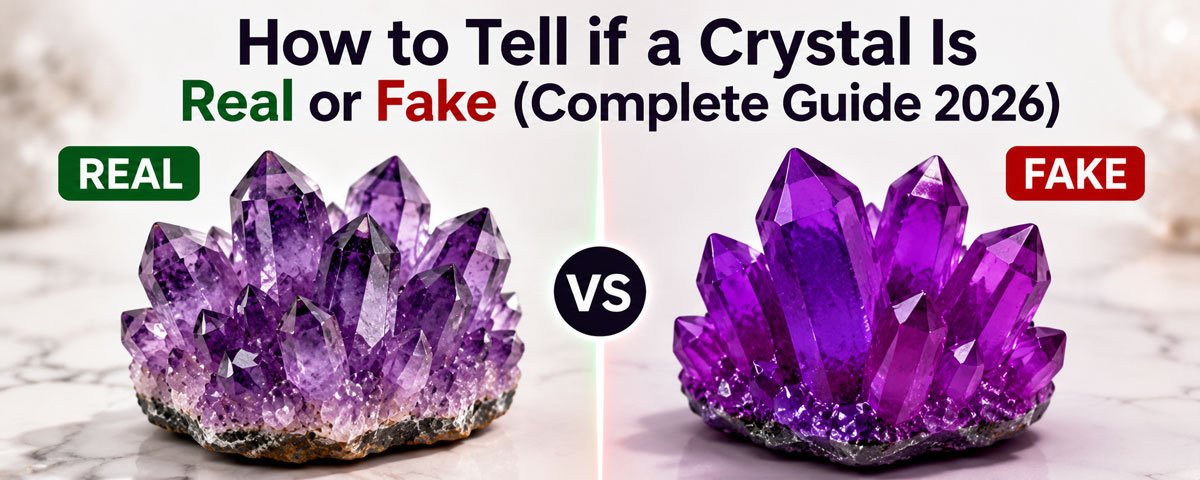
That little voice of doubt usually shows up right after buying a crystal. It looks beautiful, feels smooth, and catches the light perfectly but is it actually real? If you’ve ever wondered how to tell if a crystal is real or fake, you’re definitely not alone. With more crystal sellers appearing online every year, it’s becoming harder to separate genuine natural stones from glass, dyed minerals, or factory made imitations.
The good news is that spotting an authentic crystal doesn’t require expensive equipment. A few simple observations can reveal far more than most people expect. Colour, texture, weight, tiny natural flaws, and even temperature can all provide valuable clues.
At Gemscite, authenticity is taken seriously. Every crystal is carefully selected from trusted sources because natural gemstones deserve to be appreciated for what they truly are not for clever marketing or artificial enhancements.
This guide explains the easiest ways to identify genuine crystals, common tricks used to imitate them, and what to look for before making a purchase.
Why Fake Crystals Have Become So Common
The popularity of healing crystals has grown rapidly over the last few years. As demand increases, manufacturers have also found inexpensive ways to produce stones that closely resemble natural minerals. Many of these pieces are sold without clearly mentioning whether they’re dyed, heat-treated, reconstructed, or completely synthetic.
Some imitation crystals are made from coloured glass. Others are created using resin or compressed stone powder. At first glance, they can appear convincing, especially in online photographs with heavy editing.
That doesn’t automatically make every treated stone a bad purchase. Decorative pieces have their place. The problem begins when artificial products are advertised as rare natural crystals and sold at premium prices.
Choosing a trusted seller makes a significant difference. Browsing collections from reputable stores, such as the Gemscite Shop, reduces the chances of buying misleading products because product information is presented with greater transparency.
Natural Crystals Usually Have Small Imperfections
One of the biggest misconceptions is that genuine crystals should look flawless. In reality, nature rarely produces perfect gemstones.
Small inclusions, tiny fractures, uneven colour patterns, and natural mineral lines are often signs that a crystal formed underground over thousands or even millions of years. These features give every stone its own character.
By contrast, glass imitations often look almost too perfect. The colour appears unusually even, the surface looks identical from every angle, and there are very few natural markings inside the stone.
For example, many people who purchase genuine gemstone bracelets notice that every bead has slight differences. That’s completely normal. Those natural variations are often one of the strongest signs of authenticity.
Don’t Mistake Natural Marks for Damage
Tiny inclusions don’t reduce the value of a natural crystal. In fact, collectors often appreciate these unique characteristics because they show the stone hasn’t been manufactured in a factory.
If every bead, tower, or carving looks perfectly identical, it’s worth taking a closer look before assuming it’s natural.
Simple Ways to Check Whether a Crystal Is Genuine
You don’t need a gem laboratory to spot many fake crystals. While professional testing is the most accurate option, a few simple checks can help identify whether a crystal is likely to be natural.
1. Feel the Temperature
Natural crystals usually feel cool when first picked up, even in a warm room. They also take a little longer to warm up in your hand compared to glass or plastic. Although this isn’t a foolproof test, it can provide a useful first impression.
For example, many people notice this cool, solid feel when holding natural raw stones. Their texture and weight often feel noticeably different from imitation materials.
2. Look Closely for Air Bubbles
Grab a magnifying glass or use your phone’s camera to zoom in. Tiny round air bubbles are usually a sign that the piece is made from glass rather than a natural mineral. Genuine crystals may contain inclusions, but these rarely appear as perfectly round bubbles.
This simple check works especially well for polished items because the surface makes internal details easier to see.
3. Check the Colour Pattern
Nature isn’t perfectly consistent. Most genuine crystals display slight changes in colour, gentle banding, or areas that are lighter and darker.
If the colour looks extremely bright and completely uniform from every angle, the stone may have been dyed or manufactured. That’s particularly true for stones sold in unusual shades that aren’t commonly found in nature.
When buying products such as a chip bracelet, it’s normal for every stone chip to vary slightly in colour, size, and shape. Those small differences are often a positive sign.
4. Compare the Weight
Natural minerals are generally denser than plastic and many types of resin. Because of this, an authentic crystal often feels heavier than it looks.
If two pieces appear to be the same size but one feels unusually light, it’s worth investigating further before assuming it’s genuine.
Questions to Ask Before Buying Any Crystal
Sometimes the easiest way to avoid fake crystals is to ask the seller a few straightforward questions.
- Is the crystal completely natural or has it been treated?
- Has the stone been dyed or colour enhanced?
- Where was it sourced?
- Are the product photos of the actual item or a sample image?
A reliable seller should be comfortable answering these questions. Clear product descriptions, transparent sourcing information, and realistic photographs usually indicate a business that values honesty.
Whether you’re choosing a crystal for collecting, decoration, or personal spiritual practice, buying from a trusted source matters. Collections such as Healing Gemstones are designed for people looking for genuine natural stones rather than mass produced imitations.
Can Fake Crystals Still Be Used?
The answer depends on why the crystal is being purchased.
If it’s simply for decoration, a glass or resin crystal may still look attractive. However, many people who follow crystal healing traditions prefer natural stones because they believe their energy develops through geological processes over long periods. This belief is rooted in spiritual practice rather than scientific proof.
For meditation, mindfulness, or personal rituals, many enthusiasts choose authentic pieces because the natural origin is an important part of the experience.
Products such as a worry stone are often selected for daily moments of relaxation and reflection. Many people value them specifically because they are carved from genuine natural minerals.
Common Crystal Scams to Watch Out For
Not every misleading listing is an outright fake. Sometimes the wording makes a product sound rarer than it really is. Learning a few common tricks can help avoid disappointment.
Dyed Stones Sold as Rare Minerals
Some natural stones are artificially dyed to create brighter colours. The treatment isn’t always a problem, provided it’s clearly disclosed. Trouble starts when dyed stones are advertised as naturally vibrant or unusually rare.
If a crystal’s colour looks almost fluorescent or identical across every piece in a collection, it’s worth asking whether any colour enhancement has been used.
Glass Marketed as Quartz
Clear glass can resemble Clear Quartz in photos, especially under bright lighting. However, glass often contains tiny round air bubbles and has a more uniform appearance. Natural Quartz usually shows subtle internal patterns or mineral inclusions instead.
Made Up Crystal Names
Creative product names can sound exciting, but some have no recognised geological meaning. A quick search through trusted mineral references can reveal whether the name belongs to a genuine gemstone or is simply a marketing term.
When browsing products like a gemstone pendulum, check that the crystal type is clearly identified rather than hidden behind a catchy name.
How to Buy Authentic Crystals Online
Buying crystals online is convenient, but it also means relying on photographs and product descriptions. Spending a few extra minutes checking the seller can make all the difference.
- Read the full product description instead of only looking at the images.
- Choose sellers that clearly state whether a stone is natural, treated, or dyed.
- Look for close-up photos that show natural variations.
- Be cautious of prices that seem far below the market average for rare crystals.
- Check customer reviews to see whether buyers mention authenticity and product quality.
At Gemscite, every product is selected with authenticity in mind. From gemstone carvings to bracelets and spiritual tools, the focus remains on offering genuine stones with clear product information.
Those looking for meaningful gifts or meditation accessories often explore collections such as Gemstone Trees or handcrafted Orgonite Pyramids, where the materials used are accurately described.
Real vs Fake Crystal: A Quick Comparison
| Feature | Natural Crystal | Fake Crystal |
|---|---|---|
| Appearance | Small natural inclusions and colour variations | Often looks perfectly uniform |
| Temperature | Feels cool when first held | Warms up quickly |
| Weight | Usually heavier for its size | Often lighter if made from resin or plastic |
| Internal Features | Mineral inclusions or natural growth patterns | May contain round air bubbles if made from glass |
| Price | Reflects rarity and quality | May seem unusually inexpensive |
A Final Thought Before Choosing a Crystal
Learning how to tell if a crystal is real or fake becomes much easier with experience. Small details like natural inclusions, weight, colour variation, and honest product descriptions often reveal far more than polished marketing photos.
Whether a crystal is chosen for collecting, meditation, or because of beliefs surrounding crystal healing, knowing its true origin adds confidence to every purchase. Taking a little extra time to research the seller is almost always worthwhile.
If you’re looking for authentic, ethically sourced crystals, explore the carefully curated collection at Gemscite. Every piece is chosen with quality, transparency, and craftsmanship in mind, making it easier to shop with confidence.
Frequently Asked Questions
1. How can you tell if a crystal is real at home?
Start by checking the crystal’s weight, temperature, colour variation, and internal features. Natural crystals often have small inclusions and feel cool to the touch, while fake crystals made from glass or resin usually look more uniform.
2. Do real crystals have imperfections?
Yes. Most genuine crystals contain natural inclusions, tiny fractures, or slight colour differences. These characteristics are created during their natural formation and are often a sign of authenticity.
3. Are dyed crystals considered fake?
Not necessarily. A dyed crystal may still be a genuine natural stone. However, the treatment should be clearly disclosed. Problems arise when dyed or treated stones are sold as completely natural.
4. Can a fake crystal still be used for decoration?
Absolutely. Glass and resin crystals can make attractive decorative pieces. However, many people who follow crystal healing traditions prefer authentic natural stones because of their natural origin and formation.
5. Is every expensive crystal genuine?
No. A higher price doesn’t always guarantee authenticity. It’s always worth checking the seller’s reputation, product descriptions, and customer reviews before making a purchase.
6. Why do genuine crystals look different from one another?
Natural gemstones are formed under different geological conditions, so no two pieces are exactly alike. Slight differences in colour, pattern, and inclusions are completely normal.
7. What’s the easiest way to avoid buying fake crystals online?
Purchase from trusted sellers that provide clear product information, genuine photographs, and transparent sourcing details. Reliable stores are open about whether a crystal is natural, treated, or enhanced.
8. Where can authentic healing crystals be purchased?
If you’re looking for genuine crystals, gemstone bracelets, pendulums, and other spiritual products, browse the carefully curated collection at Gemscite. Each product is selected with a focus on authenticity and ethical sourcing.
Final Thoughts
Knowing how to tell if a crystal is real or fake isn’t about becoming a gem expert overnight. A little curiosity and a few simple checks can go a long way. Natural crystals rarely look perfect, and that’s exactly what makes them special. Their unique colours, patterns, and tiny inclusions tell the story of how they formed over thousands or even millions of years.
If a deal seems too good to be true or a crystal looks unnaturally flawless, it’s worth taking a closer look before buying. Choosing a trusted seller is one of the easiest ways to shop with confidence and avoid disappointment.
Whether you’re searching for a meaningful gift, a meditation companion, or a beautiful natural gemstone, Gemscite offers a carefully selected range of authentic crystals and spiritual products. Explore the collection and find a piece that feels right for your journey.
Explore More: Visit the Gemscite Home to discover authentic crystals, handcrafted gemstone products, and ethically sourced healing stones.
Leave a Reply